(aka “Why the Hell Did I Just Do That?”)
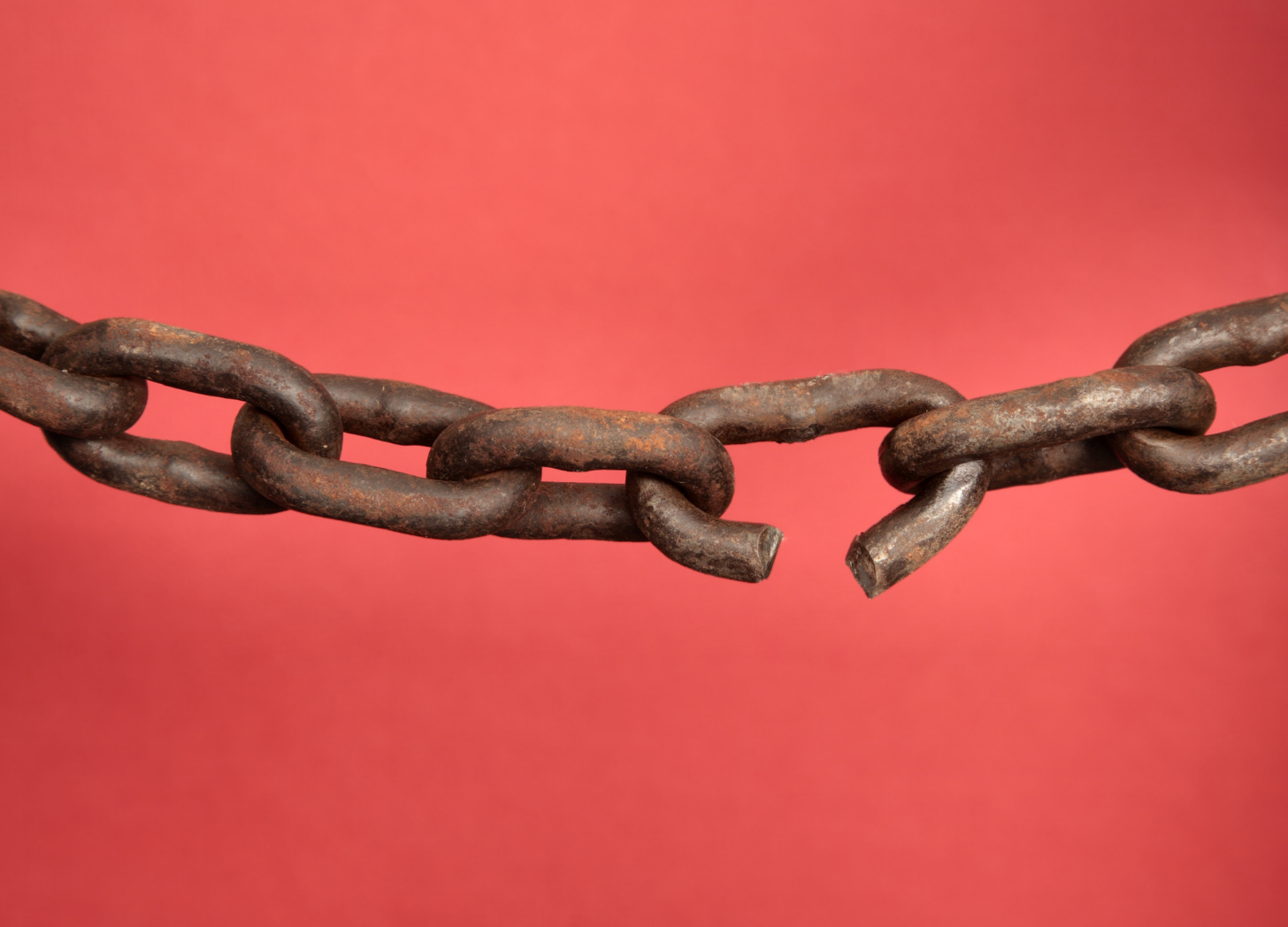
We know those moments when we come to in the middle of something—restricting again, self‑harming, bingeing, snapping at someone we love—and think: “Why the hell did I just do that?” Behavior chains give us a structured way to rewind and see the steps that got us there, instead of treating our behavior like a mysterious jump cut from “fine” to “oh no.”
What is a Behavior Chain?
In Dialectical Behavioral Therapy (DBT), a behavior chain is a step‑by‑step map of what happened before, during, and after a behavior we want to understand or change. Instead of assuming our behavior came out of nowhere, a chain asks us to name each link: our vulnerabilities, triggers, thoughts, feelings, body sensations, urges, actions, and the consequences that followed.
It’s not about shaming ourselves; it’s about getting curious enough to see the pattern.
If we can see the pattern, we can change the pattern.
The Jeans That Started Another Diet
Here’s how this can look in real life. This one’s from back when I had an eating disorder, which often manifested in restricting food.
I can recall being in a therapy session (cue choir of angels), when my therapist pulled out a worksheet and had me fill little circles with what I’d been thinking, feeling, and doing before “the thing.” It was in eating disorder treatment, so my example sounded something like this: I went on another restrictive diet. Why? I felt desperate. Why? I felt fat and out of control. Why? I believed I’d gained weight. How did I “know”? I tried on jeans that felt too tight. Were they actually different than before? I wasn’t sure. Had I weighed myself? No. Had I washed and dried the jeans so they might have shrunk? Yes. How was I feeling before it happened?
A behavior chain lets me rewind and ask, “Okay, what actually happened?” On paper, in those little circles my therapist handed me, it became a line of moments between “my jeans feel tight” and “I’m on a diet again and I kind of hate everything.” In that particular chain, I was already running on not enough sleep, feeling stressed, and especially sensitive about my body. Then came the prompting event: I tried on a pair of jeans and they felt tighter than I remembered. My mind leapt in with, “I’ve gained weight. I’m out of control. This is bad. I have to fix this.”
Desperation, shame, and panic rushed in, and my body joined the chorus with a stomach drop, a tight chest, and buzzing energy in my limbs. From there, the urge was to fix it immediately—to start over, control harder, be “good.” The next thing I knew, I had launched into a restrictive diet, maybe without even fully naming that that’s what I was doing.
Common Vulnerability Factors
(Why Some Days Everything Hits Harder)
Our chains don’t happen in a vacuum, though. Some days our nervous system is already closer to the edge, and it takes much less to push us over. There are days when we’re running on poor or not enough sleep, when we’ve skipped meals or ridden the roller coaster of blood sugar swings. Sometimes we’re dealing with physical illness, pain, or injury, or our hormones are shifting—because of our cycle, postpartum changes, perimenopause or menopause, or other medical factors. Substance use or withdrawal, even from things like caffeine, can make everything feel more intense.
Long‑term stress from work, money worries, caregiving, or ongoing conflict quietly piles up in the background. We might be carrying recent losses, rejections, or big life changes, or find old trauma stirred up by an anniversary, a smell, a place, or a person. Feeling lonely, disconnected, or misunderstood can narrow our capacity even more. And on top of all that, if we’re already riding a wave of shame, hopelessness, or harsh self‑criticism, it’s no wonder that on some days, one tight pair of jeans is all it takes for the whole chain to light up.
When we’re loaded up with vulnerability factors, our “window” for tolerating emotions and urges is smaller. The same triggering event that we could brush off on a resourced day can set off an entire chain on a depleted one.
Fact‑Checking the Chain
Behavior chains invite us to gently fact‑check the story our brain is telling at each link.
In the jeans chain, some stories might not hold up under a closer look:
“The jeans feel tighter, so I definitely gained weight.” But did I actually measure anything? Did I consider laundry shrinkage, time of day, hormones, or posture?
“If I gained weight, it’s a disaster and must be fixed with restriction.” That’s not a neutral fact; that’s diet culture, perfectionism, and all‑or‑nothing thinking talking.
When we go link by link and ask, “Is this a fact or a story?” or “Are there other explanations?” we create small openings where different choices can live.
A chain isn’t just a record of what went wrong; it becomes a drafting table for what we might do differently next time.
How Behavior Chains Fit into DBT and Remapping Ourselves
Behavior chains sit right at the center of what DBT is trying to do: help us build lives that feel worthwhile, instead of lives organized around crisis and damage control.
They link up with other DBT concepts:
Mindfulness: We need to be able to notice and name what happened—thoughts, feelings, sensations, urges—without immediately judging or shutting down.
Emotion regulation: Chains highlight how vulnerability factors and big emotions feed our behaviors, and where skills like checking the facts, PLEASE, and opposite action could go.
Distress tolerance: When we reach the point where urges are intense, distress‑tolerance skills are what help us ride it out without automatically acting.
Interpersonal effectiveness: Many chains involve relational triggers; mapping them shows where communication and boundary skills could change the ending.
When we talk about “remapping ourselves,” this is what we’re doing, link by link.
We honor that our old chains kept us alive or coping in conditions that were too much—and then we start drafting new sequences that fit who we are becoming now.
What’s Going On in Our Brains?
From a neural‑pathway perspective, every time we go from “trigger” to “catastrophic thought” to “shame or overwhelm” to “self‑harm” (or restriction, bingeing, lashing out, going blotto with booze), we strengthen that route. Our brain learns, “When I feel this way, this is what we do.” This is it. This is what it all relies on.
Behavior chains help us:
Make the pathway visible instead of automatic.
Spot the “hot links” where interventions might actually work (before we reach the point of no return).
Insert new responses—skills, pauses, supports—so the brain can learn alternative routes.
Over time, choosing something different at even one link (texting someone, using a distress‑tolerance skill, changing our self‑talk, tending to a vulnerability factor) is how we slowly build new paths. We’re not just willing ourselves to “stop it”; we’re rewiring the sequence that leads there.
How to Think About Interruption Points
Behavior chain interruption is about cutting into an automatic sequence before it reaches the problem behavior, and intentionally doing something different instead.
We map the behavior chain.
We pick one or two links (trigger, thought, feeling, urge) where we still have some wiggle room.
We pre‑decide specific moves we’ll try at those links (scripts, environment tweaks, skills, supports).
We practice and repeat, so the interruption itself becomes part of a new, healthier chain.
When We Rush Straight to Fixing
Sometimes, I go straight into fixing or solving the problems in a behavior chain. The second I spot a pattern, my brain jumps to: “Okay, how do we make sure this never happens again?” On the surface, that sounds responsible and skillful—but it can actually make the whole thing harder to experience.
When we rush to prevention mode, we often skip the parts of the chain that most need our attention: the raw feelings, the body sensations, the stories we’re telling ourselves, and the old hurts that get stirred up. Instead of sitting with “I felt desperate,” “I was so ashamed,” or “my chest was tight and I wanted to disappear,” we leap over those and land on “next time I’ll just do X.” It’s like fast‑forwarding through the most human moments to get to the lesson.
The problem is, those skipped pieces don’t actually go away. The shame, fear, grief, or loneliness we don’t fully acknowledge can hang around underneath, driving the same chain again later. We end up with a really good plan for future us, but present‑day us never gets the validation of, “Of course I did that. Look at what I was carrying.” Over time, that can turn into more pressure (“I should know better by now”) and more self‑judgment when the behavior comes back.
Letting ourselves experience the whole chain—vulnerabilities, thoughts, emotions, body, urges, behavior, consequences—slows things down. It gives us space to understand what the behavior was trying to do for us (soothe, protect, numb, control), not just what it did to us. From there, any “fixing” we do is grounded in compassion and reality, not just in panic about never messing up again.
Example Behavior Chain: Procrastinating on a Task
Let’s say the task is “start writing a report” (swap in grading, invoices, emails, etc.).
1. Vulnerability factors
Slept badly, feel foggy and low‑energy.
Already behind on other things, stress is humming in the background.
Haven’t eaten in a while, a bit wired and unfocused.
Old learning: school/work feedback has often felt shaming or perfectionistic.
These don’t cause procrastination, but they make it harder to tolerate discomfort and get started.
2. Prompting event
We sit down at the computer and see “Write report” on our to‑do list.
Or we open the document and the blank page is staring back at us.
That’s the moment the chain kicks off.
3. Thoughts
“This is going to be awful.”
“I don’t even know where to start.”
“If I start and it’s bad, I’ll feel even worse.”
“I work better under pressure anyway.”
“It’s fine, I still have time.”
4. Feelings
Anxiety.
Overwhelm.
Shame or self‑doubt.
Boredom or dread.
5. Body sensations
Tight chest, shallow breathing.
Heavy, sluggish feeling in the body.
Restless urge to move, click, scroll.
6. Urges
To check email, messages, or social media “for a second.”
To organize something instead (“I’ll just clean my desk first”).
To get a snack, make tea, do literally any lower‑stakes task.
To tell ourselves, “I’ll start later when I feel more focused.”
7. Problem behavior
We click away and start doing easier, more immediately rewarding tasks.
We tell ourselves we’re “researching” or “getting ready” but never actually begin the core task.
Time passes; we don’t work meaningfully on the report.
8. Immediate consequences
Anxiety drops a bit as soon as we turn away from the task.
We get a hit of relief and maybe some small reward (fun content, tidy drawer, nice snack).
We feel temporarily safer because we’re not facing the possibility of struggling or “failing.”
9. Longer‑term consequences
The deadline is closer; pressure and anxiety increase.
We feel guilty, behind, and more convinced we’re “bad at follow‑through.”
We may end up rushing, pulling a late night, or turning in something that doesn’t reflect our actual ability.
The brain learns: “Avoiding hard tasks = feeling better right now,” which makes procrastination more likely next time.
Ugh, right? Right. It sounds so familiar.
Your turn.
Exercise: Ch-Ch-Chain
If we want to play with this in real life, we can start small. Just grab a piece of paper.
First, we pick one moment that has us asking, “Why the hell did I do that again?” and write it down as the last link in the chain. Then, we work backward and jot a few quick links: What was happening in our world that week (vulnerabilities)? What set it off (trigger)? What were we thinking, feeling, and feeling in our bodies? What urges showed up right before we crossed the line?
Even a few words for each link is enough to see an actual chain:
vulnerabilities then trigger then thoughts then feelings then body then urges then behavior then consequences.
Then we choose one link—just one—and decide how we’d like to experiment with it next time. If tight jeans are the trigger, maybe the new link is a hand on our heart and one kind sentence before any food rules get made. If the hot link is the thought “I can’t handle this,” maybe the new link is writing it down and adding, “My brain is saying this; it doesn’t make it a fact.”
We’re not breaking the whole chain in one heroic yank. We’re gently unhooking one link at a time and seeing what happens when it doesn’t automatically drag the next one along.