
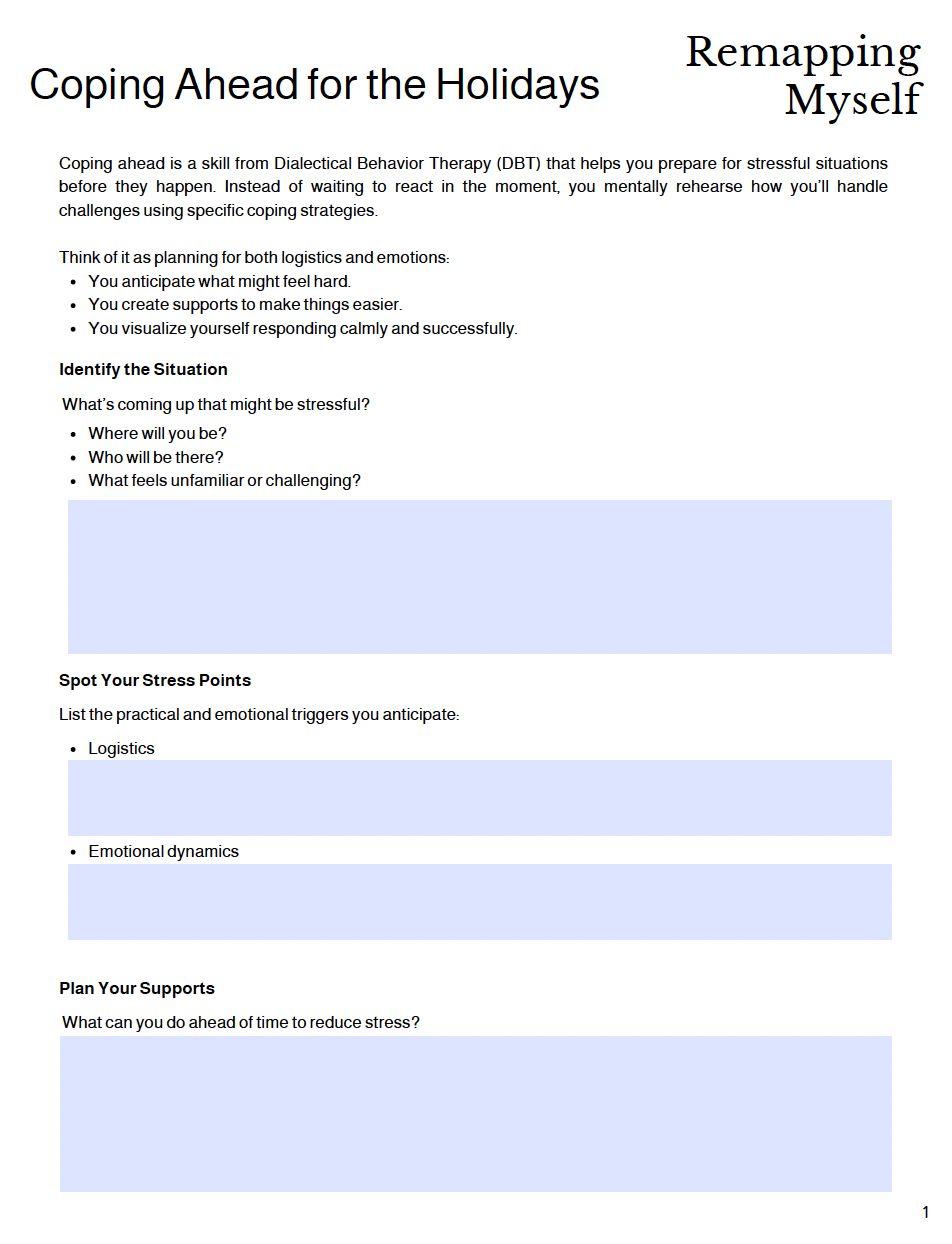
Coping ahead is a skill from Dialectical Behavior Therapy (DBT) that helps you prepare for stressful situations before they happen. Instead of waiting to react in the moment, you mentally rehearse how you’ll handle challenges using specific coping strategies.
This worksheet will walk you through it. Think of it as planning for both logistics and emotions:
You anticipate what might feel hard.
You create supports to make things easier.
You visualize yourself responding calmly and successfully.
(2 pages)
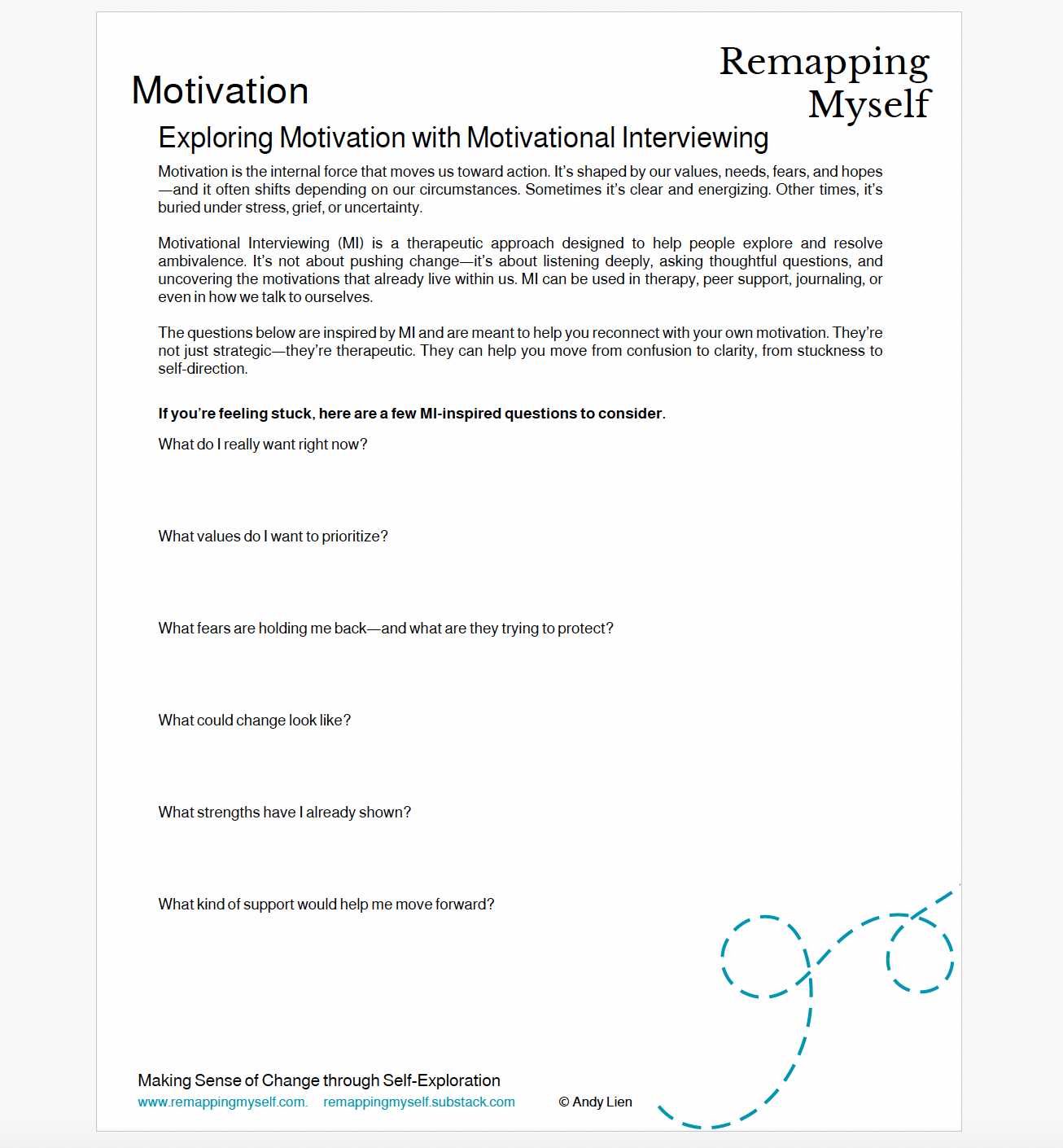
Motivation is the internal force that moves us toward action. It’s shaped by our values, needs, fears, and hopes —and it often shifts depending on our circumstances. Sometimes it’s clear and energizing. Other times, it’s buried under stress, grief, or uncertainty. The questions below are meant to help you reconnect with your own motivation. They’re not just strategic—they’re therapeutic. They can help you move from confusion to clarity, from stuckness to self-direction.
Download a PDF that you can either fill out on your computer or print to fill in by hand.
(1 page)
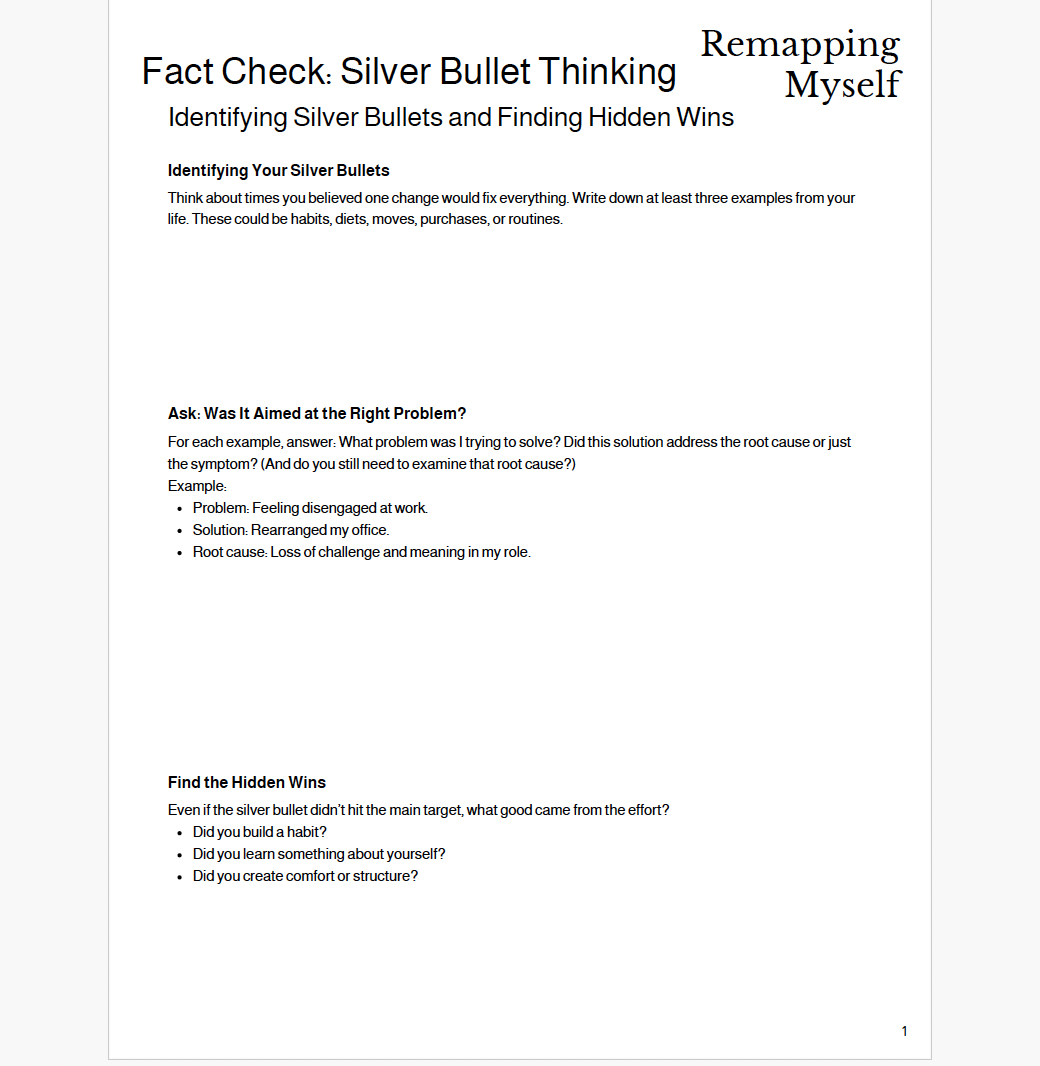
Silver bullet thinking often hides in plain sight—we don’t notice it until we look back and realize how many times we’ve chased the “one perfect fix.” This worksheet is designed to help you uncover those patterns, see what they taught you, and identify the hidden wins you might have missed. It’s also a way to remind yourself that some changes really were easier than others—and that’s worth celebrating.
Download a PDF that you can either fill out on your computer or print to fill in by hand.
(2 pages)
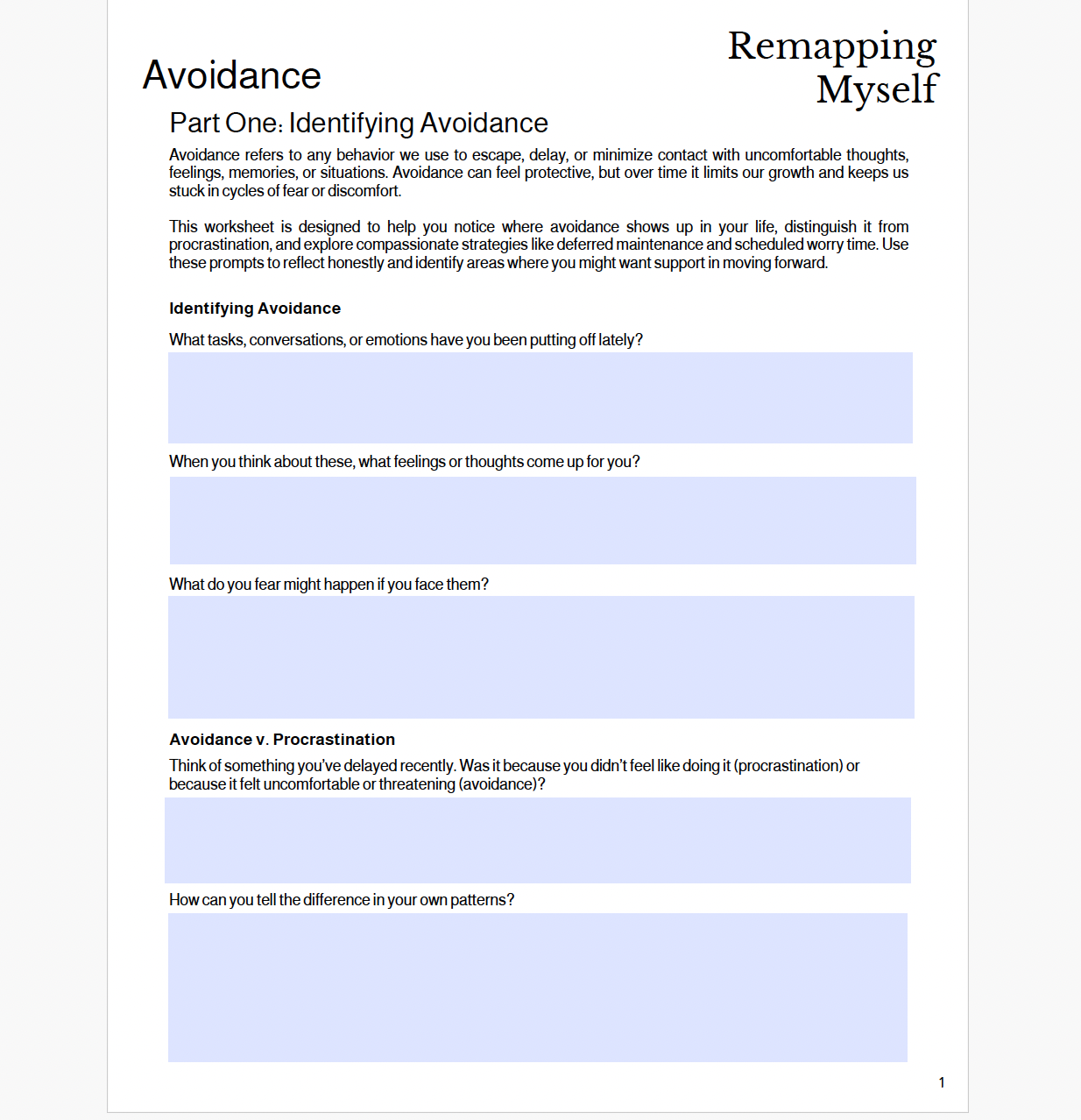
Avoidance refers to any behavior we use to escape, delay, or minimize contact with uncomfortable thoughts, feelings, memories, or situations. Avoidance can feel protective, but over time it limits our growth and keeps us stuck in cycles of fear or discomfort. This worksheet is designed to help you notice where avoidance shows up in your life, distinguish it from procrastination, and explore compassionate strategies like deferred maintenance and scheduled worry time.
Download a PDF that you can either fill out on your computer or print to fill in by hand.
(2 pages)
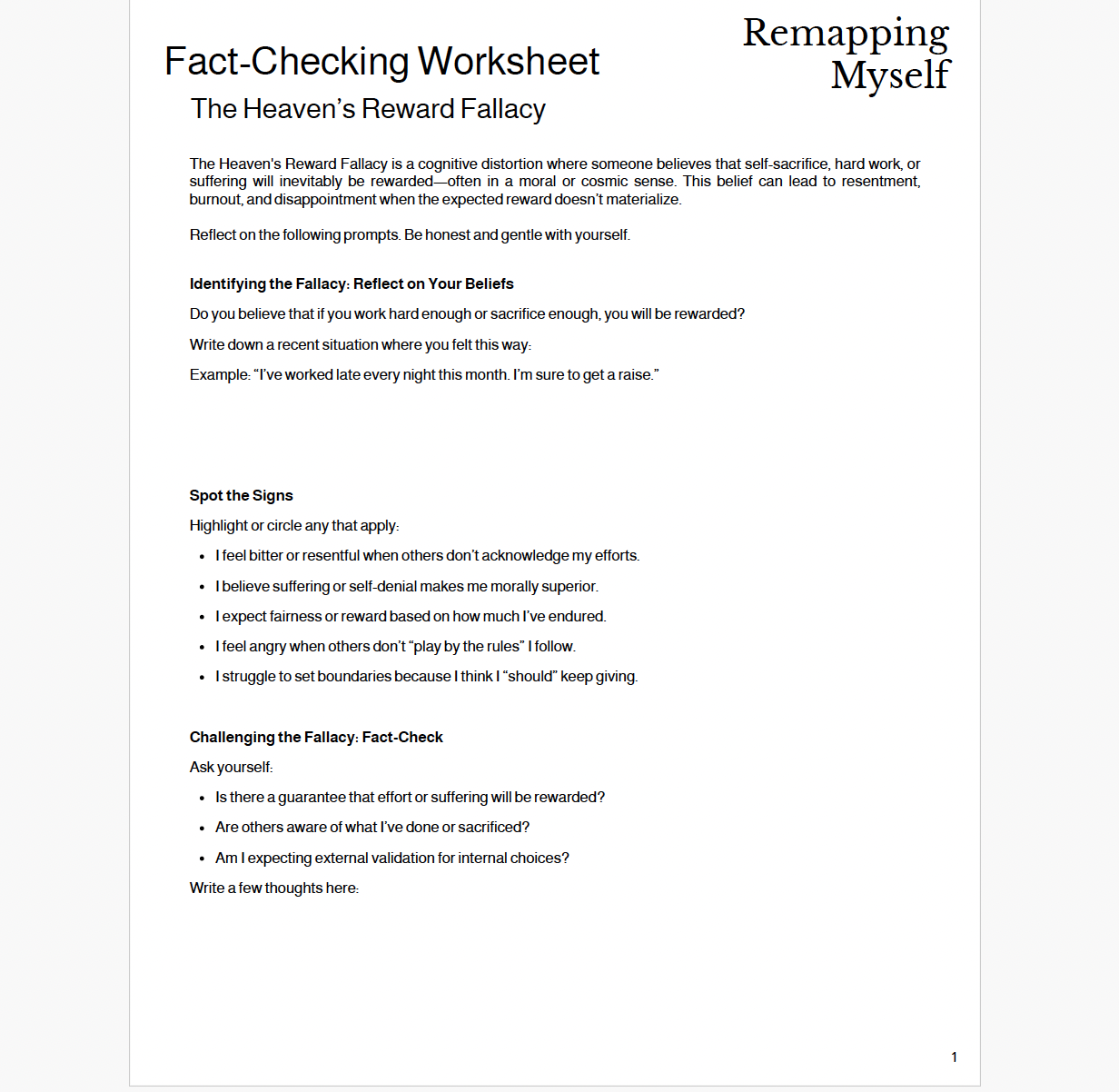
The Heaven's Reward Fallacy is a cognitive distortion where someone believes that self-sacrifice, hard work, or suffering will inevitably be rewarded—often in a moral or cosmic sense. This belief can lead to resentment, burnout, and disappointment when the expected reward doesn’t materialize. This worksheet will help you reflect on your beliefs, boundaries, and self-care goals.
Download a PDF that you can either fill out on your computer or print to fill in by hand.
(2 pages)
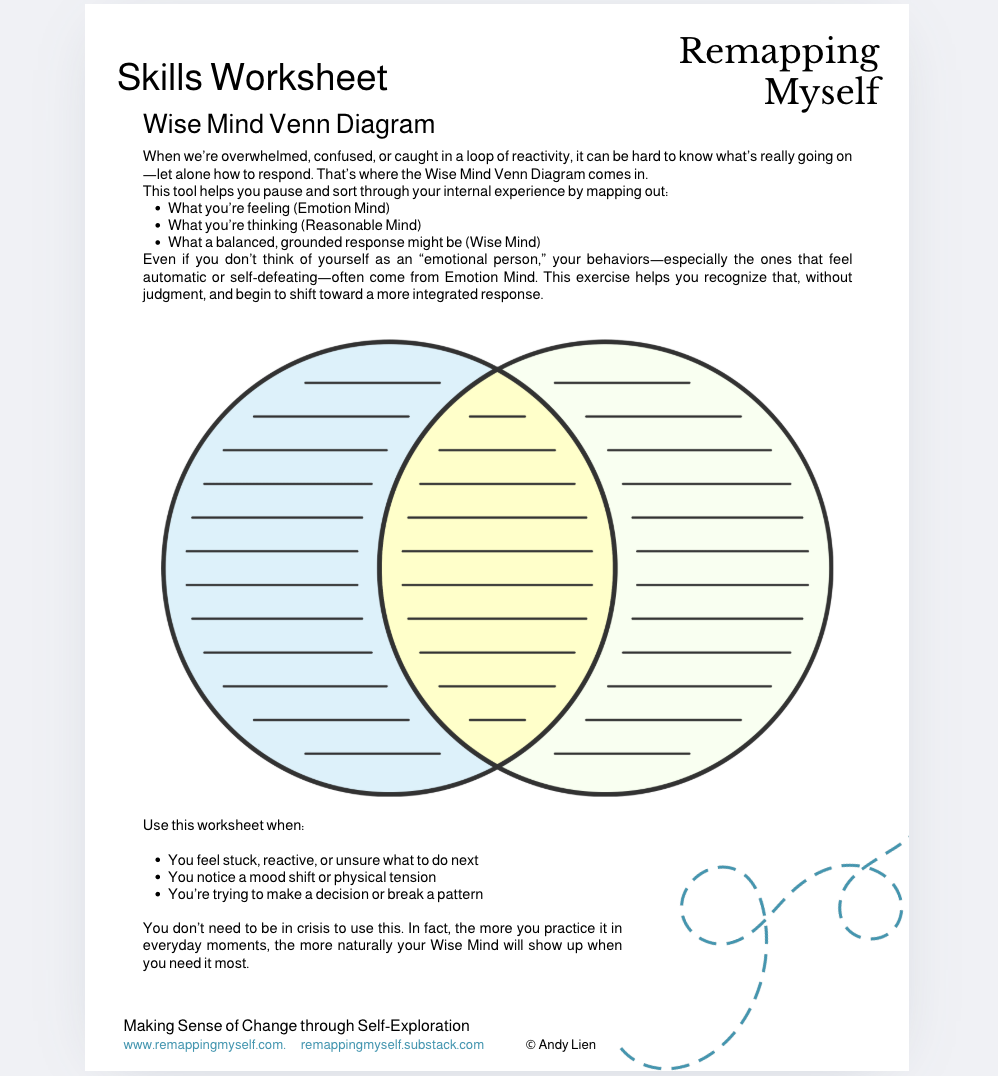
When we’re overwhelmed, confused, or caught in a loop of reactivity, it can be hard to know what’s really going on—let alone how to respond. That’s where the Wise Mind Venn Diagram comes in. This worksheet helps you pause and sort through your internal experience by mapping out:
What you’re feeling (Emotion Mind)
What you’re thinking (Reasonable Mind)
What a balanced, grounded response might be (Wise Mind)
(1 page)
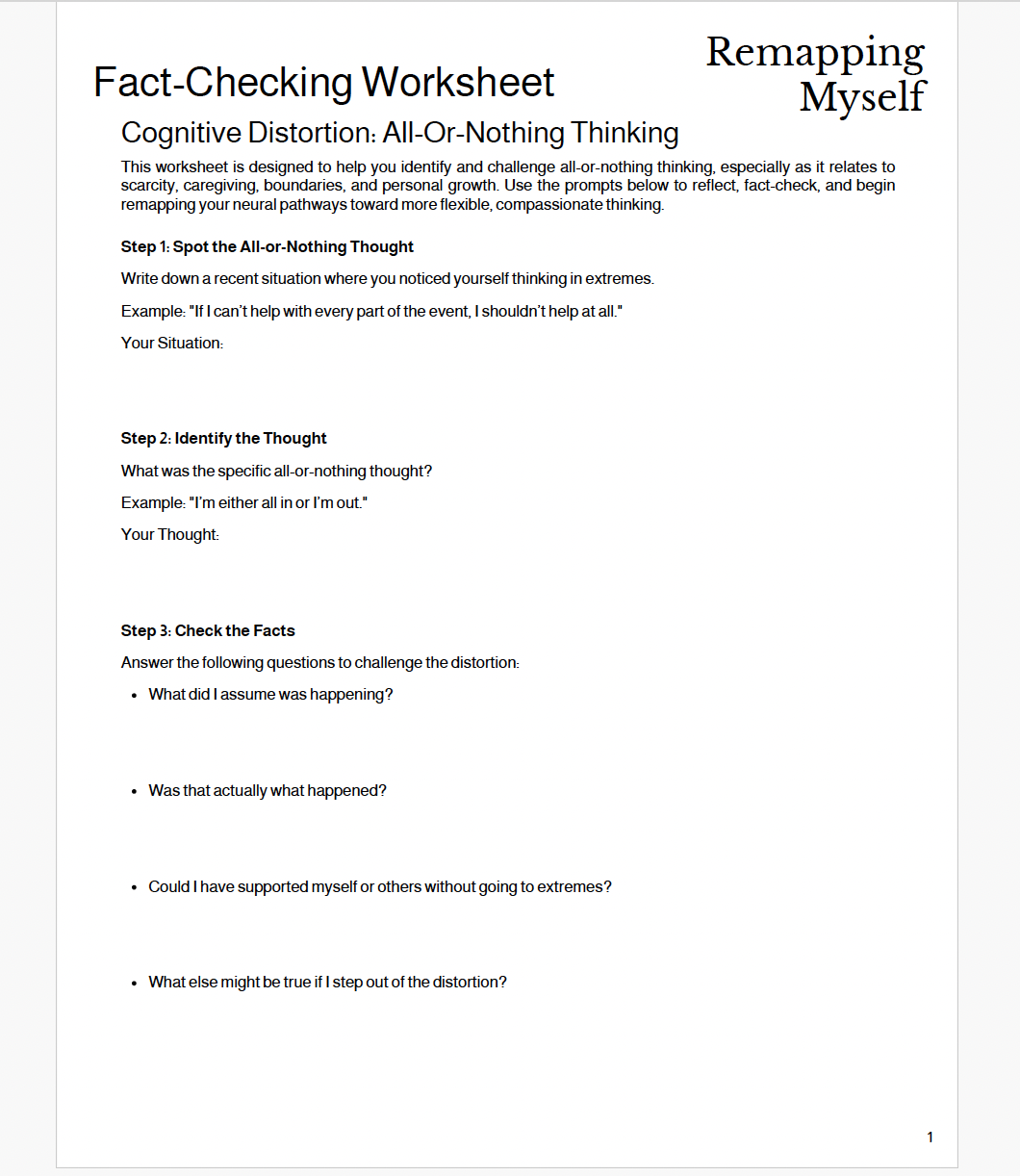
This worksheet is designed to help you identify and challenge all-or-nothing thinking, especially as it relates to scarcity, caregiving, boundaries, and personal growth. Use the prompts below to reflect, fact-check, and begin remapping your neural pathways toward more flexible, compassionate thinking.
Download a PDF that you can either fill out on your computer or print to fill in by hand.
(2 pages)
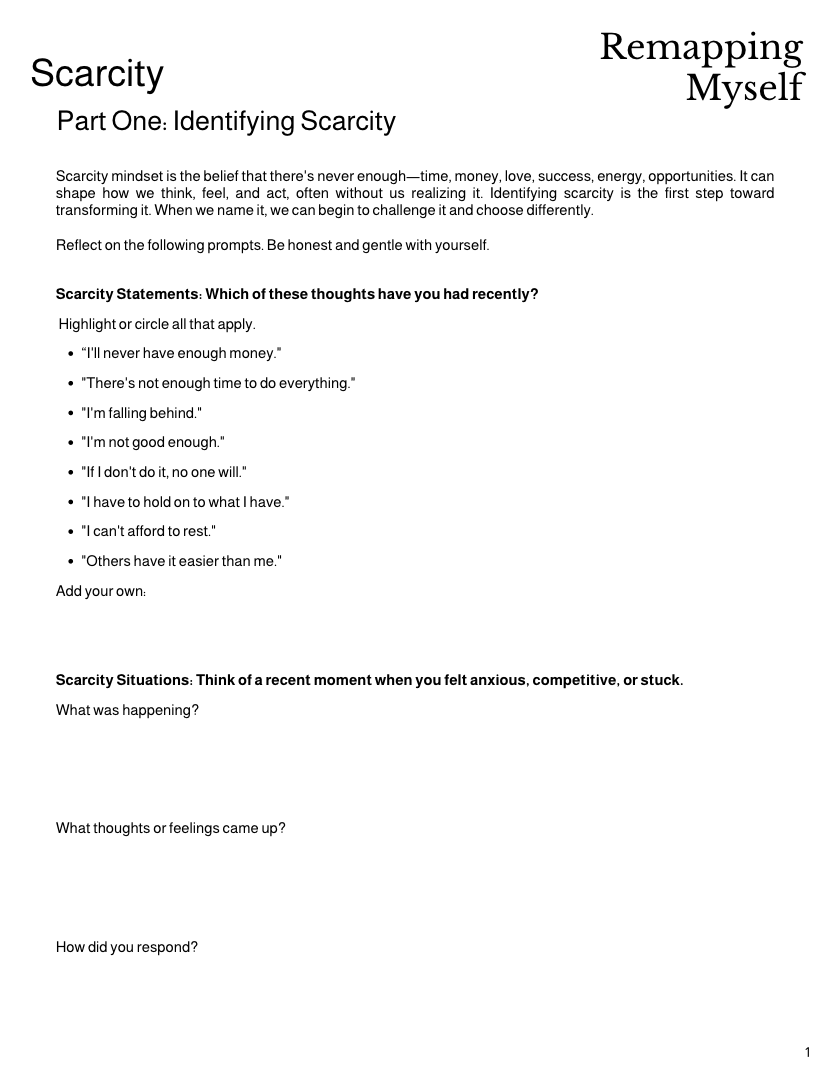
Scarcity mindset is the belief that there's never enough—time, money, love, success, energy, opportunities. It can shape how we think, feel, and act, often without us realizing it. Identifying scarcity is the first step toward transforming it. When we name it, we can begin to challenge it and choose differently.
This worksheet will walk you through identifying scenarios, triggers, thoughts, and feelings around scarcity.
Download a PDF that you can either fill out on your computer or print to fill in by hand.
(2 pages)
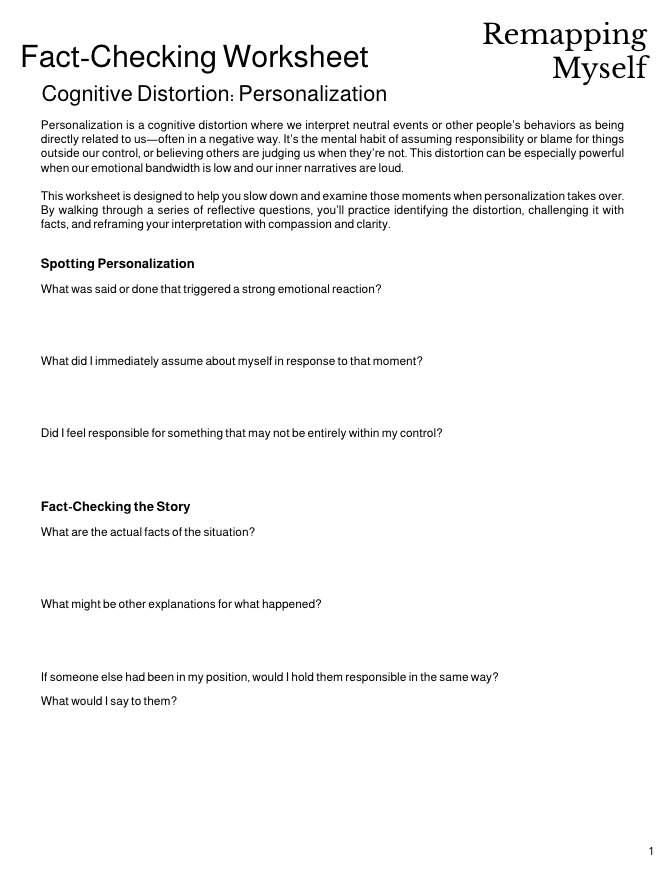
Personalization is a cognitive distortion where we interpret neutral events or other people’s behaviors as being directly related to us—often in a negative way. It’s the mental habit of assuming responsibility or blame for things outside our control, or believing others are judging us when they’re not. This distortion can be especially powerful when our emotional bandwidth is low and our inner narratives are loud.
This worksheet is designed to help you slow down and examine those moments when personalization takes over. By walking through a series of reflective questions, you’ll practice identifying the distortion, challenging it with facts, and reframing your interpretation with compassion and clarity.
Download a PDF that you can either fill out on your computer or print to fill in by hand.
(2 pages)
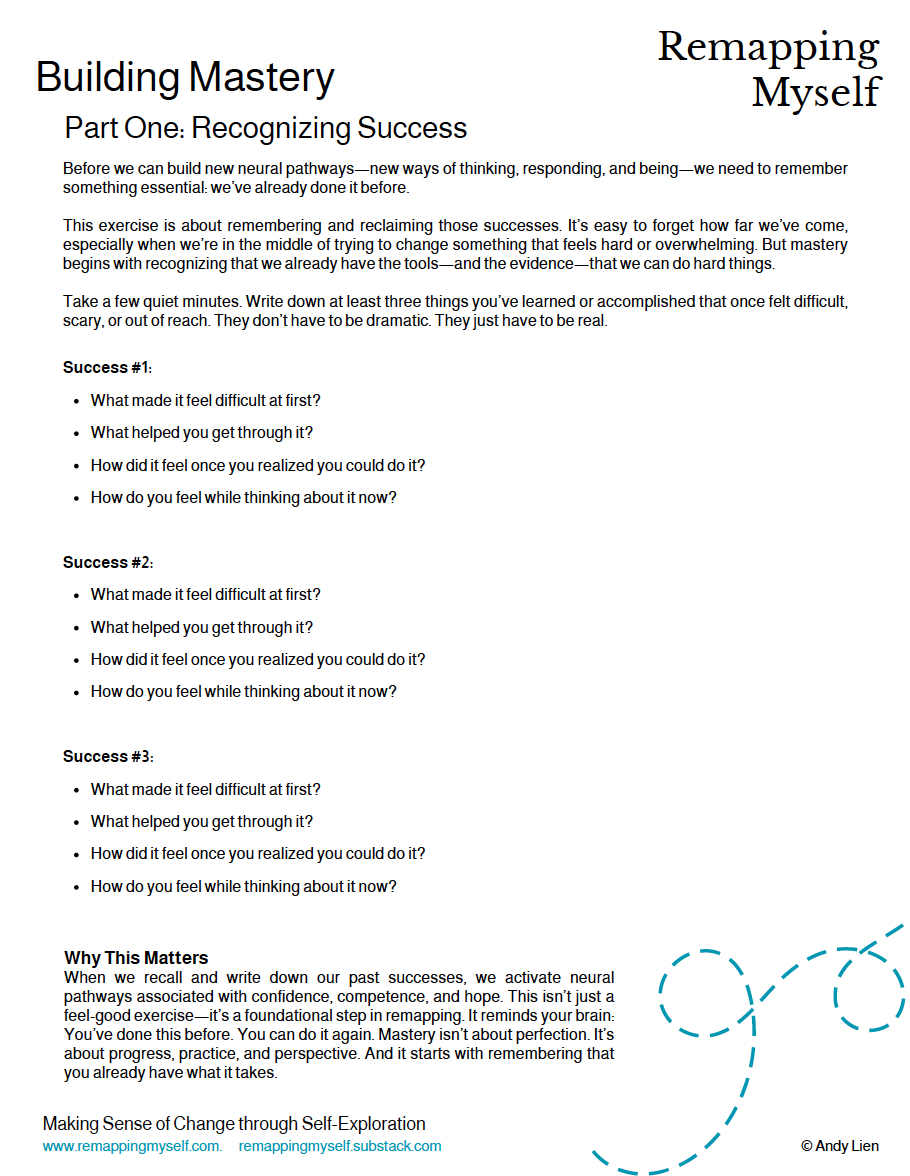
Before we can build new neural pathways—new ways of thinking, responding, and being—we need to remember something essential: we’ve already done it before. This is the first in a series of Building Mastery worksheets designed to help you reconnect with your strengths, skills, and progress. In this exercise, you’ll reflect on past successes—moments when you overcame something difficult, learned something new, or made a meaningful change. These memories are more than just reflections; they’re evidence that you already have what it takes to keep going. Mastery begins with remembering that you’ve done hard things before—and you can do them again.
Download a PDF that you can either fill out on your computer or print to fill in by hand.
(1 page)
No results match your search. Try removing a few filters.