Daylight Saving Time
Understanding it so we don't come undone.
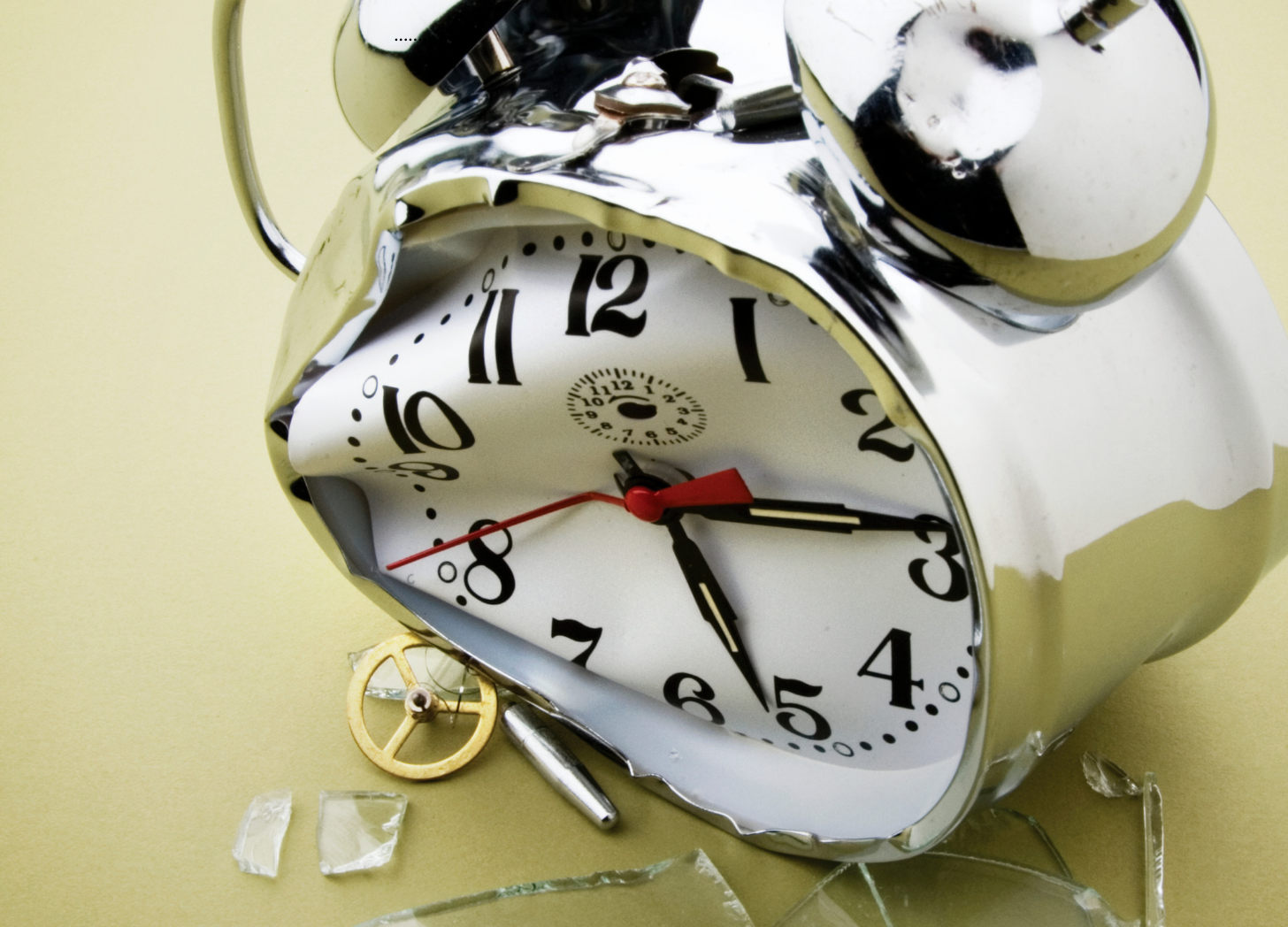
I was reading a piece by Dr. Laurie Marbas about Daylight Saving Time and was, as the kids say, today-years-old when I learned its origin story. I had always vaguely assumed it was about farmers, or “the war,” or something noble and necessary. Instead, I discovered it grew out of ideas from a small group of mostly male policymakers and planners who believed the rest of us should reorganize our days to match their preferred “efficient” use of evening daylight and energy. I got so mad.
Once I saw that, I couldn’t unsee it. I started mentally fact-checking the whole concept—who it was meant to serve, who pays the price, and how it actually lands in our bodies, our families, our recovery, and our work. That’s where this week’s Fact-Check Friday came from: not just “What is Daylight Saving Time?” but “What does it do to us, and what does it mean that we’re still doing this at all?”
This weekend, we “spring ahead,” which sounds whimsical and harmless. In real life, many of us stumble ahead, already juggling jobs, bills, relationships, kids, elders, pets, recovery, and a planet on fire—and then someone casually removes an hour of sleep and calls it fine. It’s real scarcity. For those of us carrying more of the caregiving, more of the emotional labor, more of the healing work from addiction, trauma, or eating disorders, it’s not cute; it’s more weight on an already overfull plate.
It can be another crack in the day where an old coping style used to slide in—one more excuse to drink, to skip work, to restrict or binge, to say “forget it” to the habits we worked hard to build. So let’s fact-check what’s really happening when the clocks change, and how we can gut it out together without abandoning ourselves.
Fact-Check #1: Whose Time Are We Living On?
Daylight Saving Time has been marketed as a social good—helping “society,” helping “the economy,” helping “energy use.” What doesn’t get named is who absorbs the fallout when the time shifts but all the responsibilities stay put.
It’s often:
The parent trying to get kids to school in the dark while everyone’s body says, “No.”
The adult child coordinating meds and meals for an elder whose routine did not consent to this.
The person whose dog still expects breakfast at “old time,” whose cat still head‑butts them awake on the old schedule, because pets follow sun and habit, not Congress.
In a world where women and femme folks still shoulder most unpaid care, a state‑mandated mini‑jet‑lag drops extra invisible work onto the same backs. And if we’re also the ones in recovery, or managing mental health, or keeping an eating disorder at bay, that load is even heavier.
When I was in leadership and managing people, I saw the fallout from the workplace side too: twice a year, productivity dipped, mistakes crept up, and morale slid as people tried to push through sleep debt and fog. We pretended it was “just an hour,” but bodies and brains told a different story.
Fact-Check #2: “It’s Just an Hour” (Except It Isn’t)
Our bodies are not obeying the wall clock. They’re tracking light, routines, and demands, all on slightly different channels. Our internal rhythm is listening to sunrise and sunset, our scheduled lives are ruled by alarms and bus times, and our bodies quietly remember when they usually get food, movement, and rest. When the official time jumps, those internal patterns don’t instantly jump with it.
Our brains, kids, elders, and animals are still on last week’s time, and that mismatch—what sleep researchers call circadian misalignment—shows up as extra fatigue, worse attention, slower reactions, more emotional volatility, and a noticeable bump in health risks and accidents, especially after “spring forward.”
If we have maladaptive coping styles in our history, that fog and emotional wobble can feel like a trapdoor:
“I’m exhausted; I’ll just sleep it off with a hangover and call in sick.” Or, in my case, “I’ll just stay home and drink.”
“The day is already blown; I might as well skip meals or binge.”
“I can’t think straight; I’ll numb out instead of reaching for the tools I’ve practiced.”
None of that makes us weak. It makes us human in a body that was not built for someone else’s clock experiment.
Fact-Check #3: What This Does to Our Whole System
Let’s talk about what this little clock stunt does to us as actual humans, not just as people with calendars. You know what’s coming; let’s look at it from a neuro-biopsychosocial viewpoint.
Neuro (our brains and nerves): Our brains love rhythm. They’re listening for light, meals, movement, and connection to show up at somewhat predictable times. When all of that gets shoved an hour sideways overnight, the brain scrambles to grab a new handrail. Sleep gets choppy. We feel foggy. Our feelings sit closer to the surface, and suddenly everything feels harder, touchier, and more dramatic than it did last week.
Bio (our bodies and metabolism): Hormones, blood sugar, blood pressure, inflammation—they’re all taking their cues from that internal sense of time. When the outside world says, “It’s later now,” but our cells are still on yesterday, the body spends days or weeks catching up. That strain shows up in our health, and anything we already live with—heart stuff, autoimmune flares, pain, fatigue—can feel a little more provoked. This shift is poking the proverbial bear. If we notice more cravings, more “I absolutely cannot,” or our usual movement suddenly feels awful, it’s not laziness. It’s our biology being yanked sideways.
Psychosocial (our mood, families, and lives): Dark mornings make it harder to wake up. Long, bright evenings make it harder to wind down. That combo is especially brutal on kids and teens, whose bodies already want later nights and later mornings. Bedtime battles ramp up, mornings get louder, schedules squeeze tighter, and everyone’s fuse gets shorter. Then we often layer shame on top: “Why can’t I handle a simple one-hour shift?” The truth is, it’s not simple, and this setup was never designed with our nervous systems—or our childcare, caregiving, and real‑life realities—in mind.
Fact-Check #4: Sleep, Recovery, and the Nervous System
One of the most important building blocks of eating disorder recovery is sleep: enough of it, and roughly at the same time each day. The same is true for sobriety and mental health—sleep is not a luxury; it’s infrastructure. And who of us is not in a state of recovery on a regular basis? I’d say most of us are working toward a healthier way of life.
When the time changes, we lose sleep quantity, quality, and consistency.
That is exactly the opposite of what recovery needs. Tired bodies crave quick relief: sugar, caffeine, alcohol, screens, old rituals that once soothed and now harm. Tired brains have less capacity to use the healthier tools we know about: reaching out, pausing, choosing a meal, saying, “I need help.”
If we notice more urges, more “I just don’t care,” more old scripts running louder after the time change, that’s not proof we’re failing. It’s a signal: “My nervous system is stressed; I need more support, not more shame.”
Fact-Check #5: Twice-a-Year Forced Remapping
Our habits are timed behaviors. Recovery routines are timed behaviors. Our brains don’t just encode what we do; they encode when we do it. It’s routine, not rigidity, and it is so important.
The nighttime snack that used to be a binge has become a consistent, safe meal.
The 6 a.m. walk has become our nervous system’s way of exhaling.
The weekly meeting, the morning check‑in, the bedtime ritual for kids—these live in the “habit clock.”
When we change the clock, those timings shift:
Our “6 a.m.” walk becomes 5 a.m. as far as our body cares.
Our kids’ “8 p.m.” bedtime suddenly hits them at 7 p.m. body‑time.
Our usual mealtimes creep into “too late” territory for digestion and sleep.
The cues stop matching the rewards. The autopilot we worked so hard to build feels like it’s sputtering. That is forced neural remapping: twice a year, we are asked to re‑wire routines on the fly. This is distressing. So let’s lean into distress tolerance and grace.
It doesn’t erase progress. It just means the environment has shifted, and our brains and bodies need a little extra scaffolding while they catch up.
How We Gut It Out Without Abandoning Ourselves
We can’t stop the clock from jumping this weekend, but we can decide how we move through it—especially when it’s landing on top of everything we’re already holding.
We can aim for “softer” instead of “perfect.” If we see the change coming, we can start easing toward it instead of bracing and hoping for the best. Maybe that looks like going to bed and getting up a little earlier for a few days, or shifting meals and movement just a bit sooner so our bodies get a gradual nudge instead of a shove. And if we’re reading this after the fact, we can still adjust in small steps instead of demanding that we instantly function like nothing happened.
We can let light and dark work for us. We can use our environment as a co‑regulator. In the morning, that might mean opening curtains, stepping outside for a few minutes, or at least facing a window while we drink something warm. At night, it might mean softening the lights sooner, turning screens down or off, and letting our brains register that evening really has arrived. It’s not about doing it perfectly; it’s about stacking tiny signals in the direction our nervous systems and our recovery need.
We can lower the bar and name the situation. We can pre‑decide and pre-cope that this week, our capacity is lower—and that this is predictable, not a moral failure. That might look like fewer extra commitments, simpler food, and a bit more grace for tears, snappishness, zoning out, or needing quiet. And we can say it out loud in our homes and to ourselves: “We’re in time‑change week. We’re doing the gentle version.” Giving it a name lets us reach for kindness instead of defaulting to criticism.
We can hold on to a few small anchors. Instead of trying to keep every single habit intact, we can choose a tiny, realistic handful to protect. Maybe that’s a basic sleep window we try to honor, even if the timing isn’t perfect. Maybe it’s one dependable source of nourishment—regular meals or snacks, especially if we’re in eating disorder recovery. Maybe it’s one point of connection: a text, a meeting, a standing call, a journal check‑in. These are not pass/fail assignments. They’re small anchors we can wrap our fingers around while the ground shakes a bit.
Our Daylight Saving Time Permission Slip
So here’s our permission slip, layered right on top of everything we’re already holding:
We are not required to pretend this is nothing.
We are allowed to be tired, off-kilter, and kind to ourselves and each other.
We are allowed to ask for help, to simplify, to say “no” more than usual.
We are allowed to notice who this hits hardest—women, caregivers, folks in recovery, people with fragile sleep—and to call that real.
We are allowed to protect sleep as a core part of our recovery, not an optional add‑on.
Gutting it out doesn’t have to mean white‑knuckling our way through one more demand on top of an already overloaded life. It can mean saying, “This is hard on our system,” and then adjusting the environment, the expectations, and the story so that we stay with ourselves—kids, elders, pets, inboxes, and all—while the clocks catch up.