Coping in Minnesota
How to hold the horror we're experiencing. Still. Again.
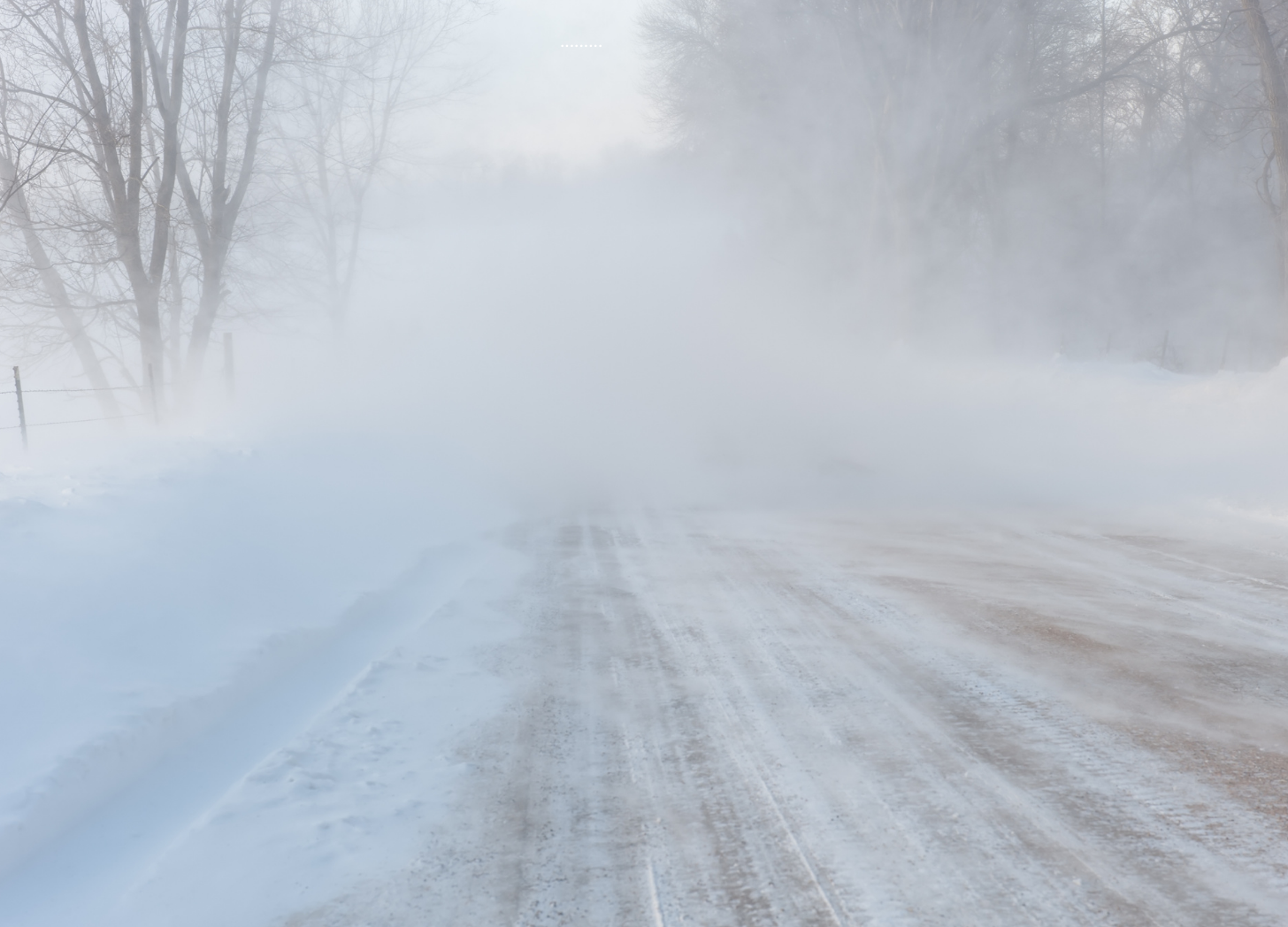
My yesterday started in our Minnesota house, on a bitterly cold January morning, with a full bladder and a phone full of notifications. The power had gone out, which was jarring to see in the minus‑20 degree weather. Family was mid‑migration for my dad’s 80th birthday dinner—some on time, some running late, some texting from the road. A text conversation informed me that the neighbor at the end of the cul‑de‑sac had just died. The dog needed to pee without freezing his paws off, and I was just trying to drink one cup of coffee all the way to the bottom while my nervous system was already at a slow boil.
I finally sat down, coffee in hand, dog back inside, and electricity drama contained (after learning that Dan had been experimenting with the new solar panels and SPAN panel). After a few minutes of quiet scrolling on our phones, Dan said, “There’s been another shooting.” I immediately went to Facebook to see if any of my helper/observer friends had posted anything. They had. They’d posted they were safe. But then we learned that it wasn’t just any shooting—it was an execution of one of us, by agents of our own government, here. In Minnesota. Again.
Trauma Reverb
From there, the rest of the day shifted into that familiar, awful pandemic mode. Remember that? The one that started with this illness that came to our country and started spreading, affecting communities and killing somewhat indiscriminately, forcing us to hang on our leadership’s words and guidance, hoping they’d get us through it?
I remember it as if it was last week. So it felt all-too-familiar yesterday. But this one is the start of a new virus, a new pandemic. And my system is responding the same way. Reactivated.
When crisis met ordinary life yesterday, the day became a split‑screen: on one side, we were glued to live coverage, hunting for reliable information, refreshing feeds, sending and answering check‑in texts. On the other, life kept knocking: What about Dad’s birthday? My brother, his wife, their kids—they were all still heading our way from Wisconsin, Michigan, and Minneapolis. Were we still going out? Definitely not to the original restaurant in Minneapolis. So now what?
The younger kid goes to the art school just a few blocks from where the murder took place, so part of my brain was locked on her school, her walks, her routes, her friends. Another part was trying to locate other loved ones, mentally mapping neighborhoods, watching for the names of streets and buildings and schools that meant “our people.”
Meanwhile, my dad—who is turning 80 on Monday and living with vascular dementia—asked his now‑daily question when he emerged for the day: “Did ICE kill anyone today?” This time, I had to tell him yes. Watching his face crumple was like watching the whole state’s heart break in miniature. We had developed a sick morning ritual around brutality, and it was unfortunately justified.
And Life Still Knocked
Okay, so if we aren’t going out to the original restaurant, we needed a new one. What did he want for his birthday dinner? “Ribs,” he said. Always ribs.
So now the questions became: How would we cook ribs fast enough? Where should we get them? What about a cake? I HAVE TO MAKE A CAAAAAAKE. Was everyone still coming to stay? Were the roads safe? Were the protests safe? Were we safe?
Dan suggested the little steakhouse a couple of miles up the road—a tiny country gem. I felt a wave of relief that was half menu‑related and half nervous‑system‑related. We could go somewhere closer, easier, quieter and skip the muss and fuss of making the magic happen ourselves. Thank goodness. And, while booking the new reservations, I was also keeping one eye on the live coverage of a citizen being murdered in real time by the state that said it was there to protect us. Dialectics.
I was texting friends, posting in side chats, checking on the art‑school kid, rescuing the robotic vacuum that had just eaten the cord for the blinds, adjusting dinner plans, wrapping Dad’s gift, and wondering why I felt so overwhelmed “just” 40 minutes away when people much closer were living in the blast radius.
Togetherness
And then one of the waves crested when I’d finally hugged both kids who had made it to our house safe and sound. It was clear that tensions were high. Of course they were. It was really hard for all of us to carry what seemed like it shouldn’t be carried at the same time: devastation and celebration.
So I took the opportunity to say out loud that we were all under a lot of stress, that our windows of tolerance were barely cracked open, and that we needed to remember that. I maybe should have ting-ed some finger cymbals and burned some incense, but it wasn’t nearly as touchy-feely as it sounds. That simple naming was mindfulness in real time. It was saying: “Here’s what’s happening in us right now. Let’s not pretend this is a normal birthday.”
We went out to dinner while others were lighting candles on their front stoops and holding vigil. It felt wrong and necessary at the same time. I asked the younger kid—who had spent much of the day at the site—what she saw, what she experienced. I hoped she felt some small measure of relief in telling the story, even as I felt the weight of hearing it.
I also hoped my dad felt the love wrapping around him, even as the world outside felt like it was unraveling. We had plenty to mourn, and also something real to celebrate.
I didn’t truly exhale until my brother texted that he had gotten his kid back to her apartment and navigated the National Guard checkpoints in and out of her neighborhood.
Coming Down
And at the end of the day, the bill came due.
We had made it through the power outage, the logistics, the murder, the news, the dinner, the checkpoints, and the good‑night texts. I thought I was doing “okay enough” until the elder kid asked a simple, perfectly reasonable question about which bedding to use on their bed. My brain sputtered and died like a car in subzero weather. I just looked at them with sad eyes and said, “I’m gone. I can’t think. You can look in the drawers. Or you can skip the sheets, it’s FINE. Are you cool with that?” Luckily, they were.
That tiny moment—opting out of doing the “right” thing with the bedding—was actually another act of mindfulness: recognizing my system was cooked and choosing the path of least harm instead of pushing myself past empty.
Around that same time, I also tagged out of a conversation about my new publishing plans. The questions were really good, thoughtful, and exactly the kind I normally love. But I could feel it: the answers were there somewhere, and I just couldn’t reach them. So I named it and bowed out. I knew my brain was offline. I knew I couldn’t grab the words. And I also knew that was okay.
Not a failure. A limit.
That’s another form of mindfulness: being able to say, “I am not available for this right now,” before I crashed into resentment or collapse.
Full-Bore Fact-Checking
Yesterday I ended up fact‑checking on two levels at once.
On the outside, I kept doing the concrete checks:
Looking for multiple credible sources before I believed anything, especially posts that were rage‑bait.
Watching for corrections and updates as more information came in, knowing early coverage is often incomplete or wrong.
Comparing what I saw on social media with local reporting, official statements, and what people on the ground (like my niece) were actually experiencing.
That was my way of refusing to let my nervous system be yanked around by half‑true headlines or distorted clips. It didn’t make the reality better, but it kept me from reacting to stories that weren’t real on top of the horror that was.
More than FOMO
On the inside, I was fact‑checking a different story: the one that says, “If you’re not physically at the protest, suiting up and standing in the street, you’re not doing enough. You don’t care enough. You’re letting people down.”
That feeling of helplessness and self‑accusation is extremely common in times of unrest. Psychologists talk about how, when we face repeated large‑scale harm, we can flip between fight, freeze, and a kind of learned helplessness where it all feels pointless and we turn the anger on ourselves. Add in the bystander effect—where seeing so many other people acting can make us feel both smaller and more ashamed—and it’s easy to believe that “not going down there” equals “doing nothing” or “not caring.”
So I kept asking myself quieter, more precise questions, like:
“What is actually possible for my body and brain today?”
“What am I already doing that is real?”
“Would going down there right now be an act of care, or an act of self‑punishment?”
I thought about how activism, in the broadest sense, includes: showing up in person, yes, but also staying informed, amplifying accurate information, checking on people directly affected, supporting mutual aid groups, and preserving our own capacity so we can keep going. I reminded myself that people who are frozen or overwhelmed from a distance are not useless; we are human, and we can still contribute in ways that match our current window of tolerance.
Fact‑checking my own “I’m not involved enough” story meant noticing that it was being fueled by grief, fear, and a very old pattern that equates self‑sacrifice with worth. It meant letting myself feel how helpless and wrong it felt to not physically stand with the people in the streets, and at the same time, not forcing my nervous system into a situation it could not handle well yesterday.
Instead of treating my limits as evidence against me, I tried to treat them as data. My job, yesterday, was to stay regulated enough to care for my dad, stay connected to my family, track what was happening as cleanly as I could, and not add another layer of harm to myself or anyone else. That did not erase the helplessness. But it did keep me from confusing “I feel helpless” with “I am helpless” or “I am doing nothing.”
Upon Further Reflection
Today, as I sit with a quieter house and a snoring dog, I keep thinking about how differently yesterday would have gone if I hadn’t spent years remapping my neural pathways.
In an older version of me—an earlier map—yesterday would have been soaked in:
Alcohol: to “take the edge off,” then to numb out completely, then to cope with the shame about how I coped.
Eating‑disorder behaviors: restricting, binging, obsessing, punishing, or using food and my body as the only levers I thought I could pull.
Those old pathways didn’t just harm me; they radiated out. They would have made me less present for my dad’s birthday, less attuned to the kids’ safety, less able to be a steady person in the room while everyone’s window of tolerance was a sliver. In a week like this, I would have added another layer of crisis on top of an already unbearable day.
What I did instead yesterday was a steady stream of skills. Not perfect. Not pretty. But skills:
Mindfulness: noticing my body, naming that our windows of tolerance were tiny, catching my own overload and saying, “I’m gone, I can’t think.”
Distress tolerance: riding wave after wave of awful news without adding extra fires—using distraction when needed (planning dinner, logistics), using self‑soothing (coffee, dog, light, familiar routines), and using “radical acceptance” of what I could not change in that moment.
Fact-checking: understanding that I had to be vigilantly checking what I was thinking and feeling to be sure I wasn’t going into default, distorted territory.
Emotion regulation: acknowledging anger, grief, fear, and love without letting any single one take the wheel completely; letting myself feel without drowning.
Interpersonal effectiveness: checking on people, asking the younger kid about her experience, saying out loud what the group was going through, setting tiny boundaries like “I can’t have this publishing conversation right now.” Not trying to control the situation, but ask others what we want to do.
Being able to recount the day now, in detail, is part of the same process. It helps my nervous system metabolize what happened instead of storing it as an unnamed blur. The storytelling is a kind of neural filing: “This is what we went through. This is how we showed up. This is how we survived intact enough to tell the story.”
You, This Moment in History, and Your Own Map
All of this makes me wonder about you, reading this, taking in this moment in our shared history.
If you pause for just a moment and look at yourself with as much gentleness as you can manage:
How are you doing, really, as you navigate days like these?
What old pathways light up for you under this kind of stress—numbing, overworking, overhelping, substances, perfectionism, checking out?
What skillful paths (even tiny ones) are you already walking, maybe without giving yourself credit?
If it feels useful, here are some prompts you might sit with, write about, or just hold gently in your mind today:
“When I think about what’s happening in our community right now, I notice these sensations in my body…”
“In the last week, I’ve coped by… Some of those strategies help me; some of them hurt me. Here’s what I notice about both.”
“If my nervous system could speak honestly today, it would say…”
“One small way I protected myself or others yesterday was…”
“If I imagine how I might have handled this same day five or ten years ago, here’s what feels different now…”
“What grace do I need to extend to myself today, knowing the kind of world I’m trying to live in?”
You don’t have to have big, polished answers. Even a fragment—“I’m tired,” “I’m scared,” “I’m proud of how I handled X,” “I don’t know what I feel”—is part of mapping your inner landscape.
If you want, you can treat today as a quiet check‑in with your own neural pathways:
Where did I walk the old roads?
Where did I, even briefly, step into something new?
Both answers are data, not verdicts. And both can be held with the same mindful, compassionate attention you would offer someone you love.