“Normal”
This is not normal. It can't be. We won't let it be.
“Normal” is one of the words I’m fighting with the most right now. My normal day today involved going to the dentist’s office, walking slowly through the grocery store with a cart, and cleaning my pottery studio. Some of my friends experienced a different normal of listening to whistles go off outside their homes, watching ICE sit outside their kids’ schools, fielding texts about masked and armed bounty hunters. I am living inside one “normal,” and they’re being forced into another. My worry is not only about the violence itself, which is enough. It’s about what happens if this, too, becomes normal—just more noise in the background of Minnesota life.

Security
Is feeling secure a fallacy? A mirage? Right now, it feels impossible.
Security. It’s a word I used to associate with milestones—steady work, a paycheck, sobriety, a sense that if I just kept doing the next right thing, the ground would stop moving. But lately the ground seems committed to motion. Government agents are hurting people and detaining others. The headlines keep getting darker. Our systems remember too much—the pandemic years, the political turbulence, the uncertainty that taught us all to stay on high alert.

Mindfulness
I need to work on this one. Right now. Okay, after I finish writing this.
Believe me, with everything going on in our country lately—especially Minnesota—it is really hard to be present and alert instead of hiding and numbing. I’m tired all the time, but that’s also how things go with perimenopause (or whatever), so we’re just radically accepting everything over here. I know, ultimately, that being mindful is the best thing I can do for myself right now. But why? And am I doing it? Or am I just not being avoidant?

Coping in Minnesota
How to hold the horror we're experiencing. Still. Again.
My yesterday started in our Minnesota house, on a bitterly cold January morning, with a full bladder and a phone full of notifications. The power had gone out, which was jarring to see in the minus‑20 degree weather. Family was mid‑migration for my dad’s 80th birthday dinner—some on time, some running late, some texting from the road. A text conversation informed me that the neighbor at the end of the cul‑de‑sac had just died. The dog needed to pee without freezing his paws off, and I was just trying to drink one cup of coffee all the way to the bottom while my nervous system was already at a slow boil.
Disinformation
And it’s insidious. And it has lasting effects.
It starts with watching people you know begin to sound like they’re living in a different reality.
First, it was the “smoking guns”—the links and screenshots and grainy videos proving, supposedly, that they knew something the rest of us didn’t. The posts about how we were just sheep, swallowing “fake news,” too gullible or too brainwashed to see what was “really” going on. Then, slowly, that same lens started showing up everywhere: in how they talked about elections, protests, vaccines, neighbors, fraud, whole communities. We’ll see about the Epstein files. That one could be a unifier.

Knowing
What I know is that not enough people know.
Knowing has never been simple for me. Or, when it was, I probably shouldn’t have thought I knew it. Thinking I knew everything got me into a lot of trouble.
For me, knowing is not a neat stack of facts I memorized in school; it is a whole-body sense of “this is how the world works” that lives in my memories, my nervous system, my relationships, my stories. I grew up with certain things I was supposed to know: that people deserve basic dignity and due process, that uniforms mean safety, that pulpits and classrooms mean moral clarity and care. Those weren’t just ideas; they were the backdrop of reality. And then life, in its usual rude way, kept handing me scenes that did not fit those promises at all.

Can We Compartmentalize?
Like a true dialectic, the answer is: "Yes, and."
Sometimes the brain’s best work happens behind closed doors. Or in closed boxes. Schrödinger’s Problem, perhaps?
When everything inside us starts to blur—grief bumping against stress, worry tangling with memory—the mind does something deceptively simple: It makes tiny boxes. Quiet little mental compartments that say, This goes over here for now so you can deal with what’s in front of you.
It’s easy to label that as avoidance, but that’s not the whole story.

Dialectics
A survival skill for the ages, it's how we live with contradictions.
In another installment of “what do I need right now,” I’m writing about the concept of dialectics. I’ve gotten to rely on this ability of ours with almost a religious fervor. Lately, it feels like every other day someone says some version of, “We should not be expected to work and carry on our lives while fill in the blank is happening.” I can think of a number of these situations in my adulthood: 9/11, riots, the pandemic, insurrection, DHS occupation and turmoil, lying leaders. The thing is—they are right, and also the rent is still due. We can want to stop what we’re “supposed” to be doing in order to process or address the extraordinary circumstances, but they happen all the time. Big or small.

Tragedy and Lies
Tragedies are hard enough; lies make it all so much worse.
I wrote what I need now. I need this perspective. I need to calm down. I need to stop scrolling. I need to make sense of it. I need to learn and understand. I need to have the pleasant AI voice read this to me via the Substack app while I close my eyes and rub my hands with balm that I was given as a gift at Christmas.
But, first, a story. Since I hadn’t yet done any of that yet, my body made me stop and listen to how much it needed me to calm down.
Distress Tolerance
Coping skills and the art of not making it worse.
Working at Hazelden Publishing while in recovery from alcoholism put me in a strange, privileged position: I spent my days immersed in language about behavioral and mental health while being someone with what’s called “lived experience.” My lived experience helped me see a broader view with each new concept I learned. I watched Twelve Step Facilitation, trauma work, and therapies like Dialectical Behavioral Therapy (DBT) circle the same human problems from different angles, often as if they were separate worlds instead of dance partners.

Closure
We don't necessarily ever close a door, but we can stop jiggling the handle.
Closure is one of those concepts that sounds soothing and grown‑up, like something a therapist with good glasses would prescribe. “What you really need is closure.” Oh, perfect. Where do you pick that up? Costco? Can I get it online?
The more it gets examined, the more “closure” feels less like a feeling and more like a story the brain tells itself so it can stop running worst‑case scenarios in the background. I find a lot of comfort in this way of viewing it. It is less about being “over it” and more about simplifying prediction: if the brain thinks it knows how the story goes, it doesn’t have to keep refreshing the page.

Harm and Harm Reduction
When we can’t talk about one without the other.
“Dry January” is rolling back around, right on cue. Often paired with the New Year and resolutions, we inkblot-test January 1 with starts and stops. “Sober October” shows up the same way. These trends get marketed as resets or detoxes, but underneath, they are invitations to step back and look at our relationship with alcohol—how much, how often, and at what cost. Dry‑month campaigns are linked with decreased drinking, better mood, improved sleep, and healthier lab markers for many people in the months that follow, which is classic harm‑reduction territory: turning the dial down, not necessarily ripping it out of the wall.
Starting
I'm really good at starting. I start all the time. Again and again.
We’ve all been there: standing at the edge of something new, waiting for the stars to align.
We tell ourselves we’ll start when we feel more motivated, when the house is quiet, when the kids are older, when the calendar flips to January, when we finally have a plan that feels “solid.” We hold off, hoping for perfect conditions, as if the right moment will guarantee success.
The myth underneath all of that is simple: we think a good start requires perfect conditions. That if we begin too soon, too messy, too small, it won’t count. That we need to be ready, confident, and fully equipped before we can really begin.

MoCA Tests
A crash course in cognitive decline (and remapping) as we celebrate the holidays.
On Friday, I went with my dad to what has become his now-annual neurology assessment. This was only his second one since moving into our new house after living a few years of a somewhat chaotic life in Assisted Living with my mother, a season marked by temporal amnesia, vascular dementia, and a caregiver breakdown as the pandemic raged and isolation suffocated them both. We had moved him into care because we needed help; now I was trying to build something that looked more like stability.
The Naughty and Nice Lists
Beloved holiday trope or a cosmic performance review? Cue the sad trombone.
I grew up with the Naughty and Nice Lists like many of us did. It’s everywhere—on TV specials, in school hallways, whispered by adults with a wink: “Better behave or Santa won’t come.” It sounded harmless, even magical, until it stopped feeling like a story and started feeling like paperwork—a cosmic spreadsheet quietly sorting people into good and bad, worthy and unworthy. At eight years old, that felt like a game; at forty-eight, it looks suspiciously like a cultural shorthand for judgment that outlasts the lights and the tree.
Commodifying Trauma
Right-sizing our perceptions of trauma can keep the pipeline to healing open.
The Guardian recently published a piece exploring how the term trauma has been commodified in the attention economy. The author, Katherine Rowland, warns that when influencers package pain as content, clinical nuance gets lost—and complex suffering becomes a meme. The article lays out how trauma has become a cultural currency—overflowing in self‑help books, social media, and wellness industries—turning real suffering into monetized content that draws clicks and capital. It shows how platforms reward and amplify emotional vulnerability, encouraging people to recast ordinary struggles as trauma in order to find belonging, validation, or financial gain. And it issues an urgent reminder: naming pain can be lifesaving—but when trauma becomes a brand, we risk diluting its meaning and losing the depth that drives true healing. Yet, the solution isn’t to abandon the word. It’s to use it wisely.

Neuro‑Biopsychosocial
When I got sober and, years later, sought help for my eating disorder, the urge to find the reason was so strong. I wanted the answer—the one thing that explained why this was happening. But discovering that there isn’t one reason, that there are multiple reasons, was huge. It changed everything.
I remember sitting with one therapist—I won’t say they’re all amazing; I had two clinkers over the years—and saying something like, “Oh, my parents said such and such, and I reacted like such and such.” She quickly cut in: “There’s no point in you just looking for someone to blame.” I told her I wasn’t. I was looking for understanding, to trace something to its origin. She was not great.
The Nervous System
Why I hate the term and why it matters.
As much as I talk about remapping myself, neuroplasticity, and neural pathways, I seem to avoid saying “nervous system.” It feels like a misnomer—like it’s about being anxious, jittery, or on edge. And that’s not what it is at all.
The nervous system is our body’s master communication network. It’s not a mood. It’s not a personality trait. It’s a system—an elegant, lightning-fast relay of signals that keeps us alive and functioning.
Post-Traumatic Growth
Remapping in action.
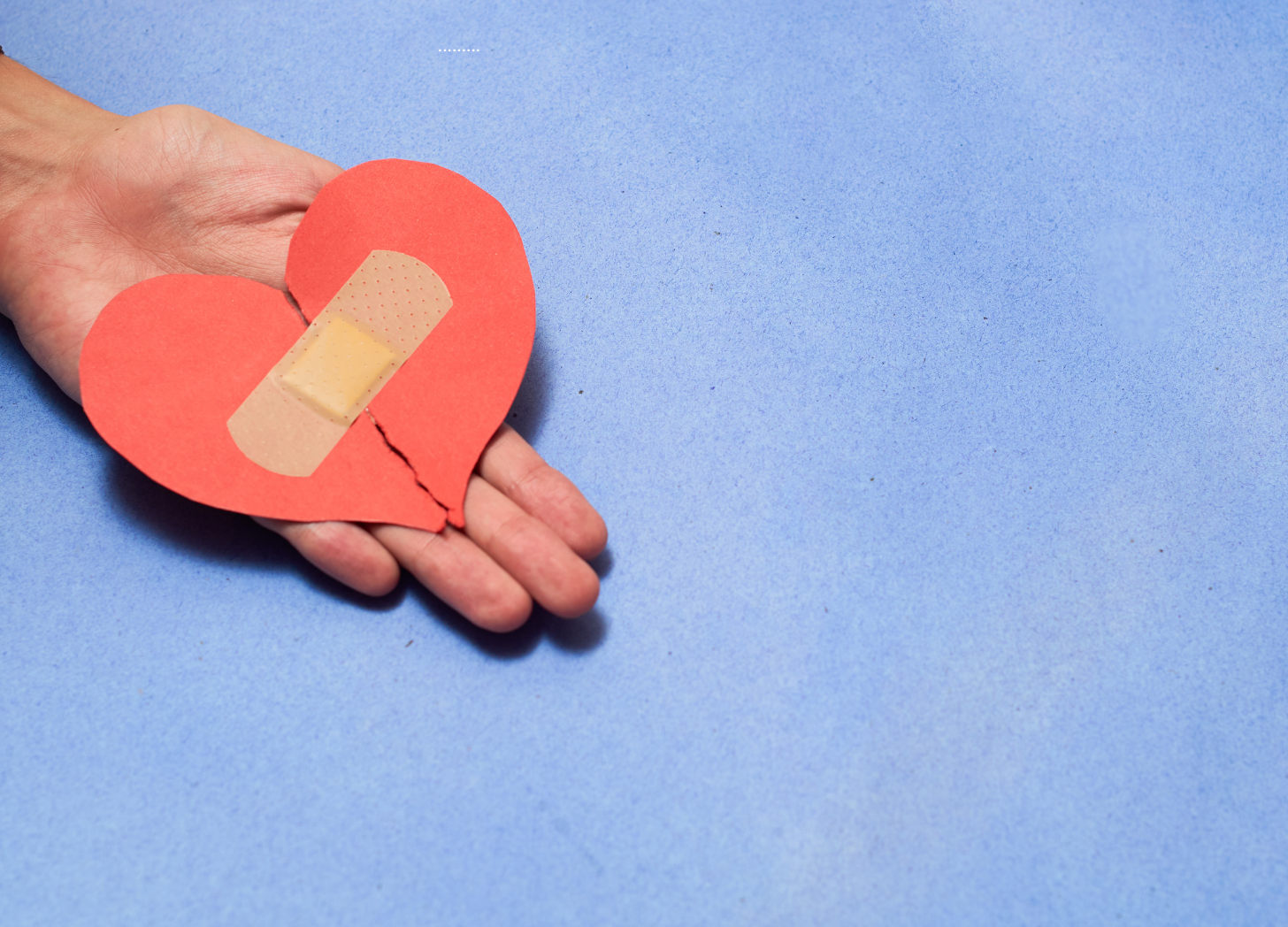
When life cracks under the weight of trauma, our first instinct is survival—patching the breaks, holding things together with whatever we’ve got. But sometimes, after the dust settles, something unexpected happens: growth. We call this Post-Traumatic Growth (PTG). And here’s the key—it’s not about going back to who we were before. That’s resilience: bouncing back. PTG is about transformation. It’s about becoming someone new because of what we’ve endured.

The Numbness Paradox
How numbness is full of feeling.
I had carpal tunnel release surgery on my right wrist this Monday. These procedures are so common and streamlined now that I barely had time to sit down before I was back out in the wild with a snip and a wrap. My hand had been pumped full of lidocaine and epinephrine—the first to knock out the nerves, the second to knock out the bleeding. It all went beautifully. Quick, efficient, and by all accounts, successful.
But I hate the numbness so much. God, I hate it.